


Kinds of Swords: 10 Medieval Sword Types and Their History
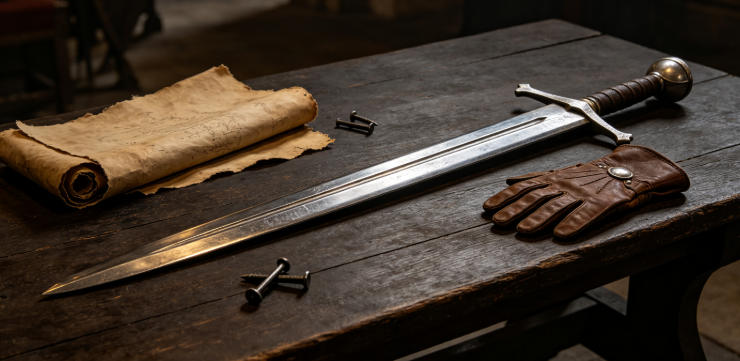
What Are the Different Kinds of Swords? A Guide to Medieval Sword Types
Throughout human history, swords have been more than weapons used in battle. They have represented power, identity, honor, social status, and cultural traditions. From early bronze swords and iron blades to the various knight swords, longswords, and greatswords that appeared in medieval Europe, sword shapes, lengths, weights, and fighting styles continued to evolve with warfare and society.
If you want to explore the different kinds of swords, the medieval period is one of the most fascinating eras to study. During this time, numerous medieval sword types emerged, including the classic arming sword, versatile longsword, powerful falchion, massive greatsword, as well as the later bastard sword and claymore. Each sword had its own structural characteristics and historical background, and its development was closely connected to armor, combat tactics, the knightly system, and battlefield conditions.
How Were Swords First Developed?
The earliest swords transformed ancient warfare and social structures. Early weapons often focused on thrusting attacks, but as metalworking and forging techniques improved, people began producing longer and stronger blades. Sword lengths and shapes gradually became more diverse, eventually leading to many different types of swords.
A sword is much more than a sharp blade. Whether it was a Viking sword designed for cutting and thrusting or a wide single-edged weapon designed primarily for powerful blows, swords became an extension of a warrior's arm. As their role in warfare increased, swords also became symbols of identity and social status.
Across many European cultures, owning a high-quality sword could indicate a person's social position. During the medieval period, a knight sword was not simply a piece of battlefield equipment. It also represented courage, honor, loyalty, and status. The cultural influence of swords extended beyond warfare into art, literature, religion, ceremonies, and social traditions.

How Did Sword Materials Change from Bronze to Iron?
The development of swords was closely connected to advances in metallurgy. Early civilizations commonly used bronze for weapons, but with the arrival of the Iron Age, iron became an increasingly important material for making blades. Iron provided greater durability and eventually laid the foundation for the development of steel swords.
The transition from bronze to iron also encouraged the evolution of sword types and their history. As iron weapons became more common, swordsmiths experimented with different blade lengths, edges, profiles, and structures to create weapons suitable for increasingly complex battlefields.
By the medieval period, European sword designs had become remarkably diverse. Knights and soldiers faced different opponents, weapons, and types of armor, so sword makers had to balance cutting ability, thrusting performance, reach, weight, and control. The longsword became one of the most recognizable results of this continued development.
What Kinds of Swords Were Used in the Medieval Period?
There was no single sword that worked perfectly in every medieval battlefield situation. Different regions, historical periods, and social groups used different weapons. As a result, the kinds of swords used during the medieval period were extremely diverse, with every medieval sword reflecting the requirements of its particular era.
From the longsword used by knights to the falchion favored for powerful cutting attacks, from the classic arming sword to the massive greatsword, these medieval sword types differed in blade length, edge design, grip, balance, and intended use.
Studying these different types of swords can help us understand not only medieval weapons but also military tactics, knightly culture, armor development, and European history.
Longsword: The Classic Medieval Knight's Long Sword
The longsword is one of the most famous medieval sword types and is often associated with the image of the medieval knight. It became particularly prominent during the later medieval period and generally featured a long double-edged blade with a grip designed for two-handed use.
One of the defining characteristics of the longsword is its versatility. Unlike swords designed primarily for one type of attack, the longsword could be used for both cutting and thrusting. Its longer blade provided increased reach, while a two-handed grip offered greater control over the weapon.
A typical medieval longsword features a cross-shaped guard and an extended grip. As armor technology developed, warriors became less dependent on shields in certain combat situations, allowing longer two-handed sword grips to become increasingly practical. The pommel at the end of the grip also helped balance the sword and contributed to its overall handling characteristics.
For these reasons, the longsword became not only an important medieval weapon but also one of the most recognizable medieval swords in modern films, fantasy games, historical collections, and sword replicas.
Falchion: A Powerful Single-Edged Cutting Sword
The falchion is another distinctive type of medieval sword. Unlike the double-edged longsword and arming sword, the falchion typically features a broad single-edged blade, with some examples having a noticeable curve.
This design made the falchion particularly suitable for powerful cutting attacks. Its appearance can sometimes resemble a large chopping weapon, but it remained an important member of the European sword family.
The blade of a falchion often has more mass toward the front, helping produce powerful cutting momentum. For medieval infantry, this design could be practical in close combat. Some falchions were also used together with shields, creating a flexible combination of offense and defense.
Compared with other medieval sword types, the falchion is especially recognizable for its broad single-edged blade and strong cutting characteristics. This makes it an important sword to understand when exploring different kinds of swords.
Greatsword: A Symbol of Power and Strength
Among the various types of medieval swords, the greatsword is one of the most visually impressive. Greatswords generally feature very long double-edged blades and are designed for two-handed control, which is why they are also commonly associated with the term two-handed sword.
These large swords became increasingly prominent during the later medieval and early Renaissance periods. Their size provided substantial reach and allowed skilled users to control a large area around them.
However, the size of a greatsword also created greater physical and spatial demands. Bigger does not simply mean stronger. A large two-handed sword required strength, coordination, training, and sufficient space to handle effectively.
Throughout history and popular culture, the greatsword has also become associated with strength, courage, and status. Its enormous blade and long grip give it a powerful visual identity, making it a popular design for medieval sword replica collections and historical-inspired displays.
Arming Sword: The Classic Knight's Sword
If the longsword represents the classic medieval long blade, the arming sword is one of the most recognizable traditional knight swords.
The arming sword is generally shorter than a longsword and is designed primarily for one-handed use. This allowed a warrior to carry a shield in the other hand, making the design particularly practical for medieval knights and soldiers.
A typical arming sword has a straight, relatively narrow double-edged blade, a crossguard, and a weighted pommel. It could be used for both cutting and thrusting, giving it a highly practical and versatile design.
During the medieval period, the arming sword was not limited to battlefield use. It could also function as a sidearm for knights and other members of the warrior class. Its moderate size, reliable construction, and versatile handling made it one of the most recognizable medieval swords.
Bastard Sword: A Flexible Hand-and-a-Half Sword
The bastard sword is an important type in the development of medieval and Renaissance European swords. It is also commonly known as a hand-and-a-half sword.
Its defining feature is its relatively long grip, positioned between the traditional one-handed sword and the full two-handed sword. Depending on the situation, a trained user could employ the sword with either one hand or two hands.
This design reflects the growing emphasis on versatility in medieval swordsmanship. Compared with an arming sword, the bastard sword could provide greater reach and leverage. Compared with a massive greatsword, it was generally easier to maneuver.
From the perspective of different kinds of swords, the bastard sword represents an important transition between one-handed and two-handed sword designs. It also demonstrates how European sword makers increasingly sought to combine versatility, reach, balance, and control.
Claymore: The Famous Scottish Two-Handed Sword
The claymore is a famous sword strongly associated with Scottish history. In modern popular culture, the term claymore is often used to describe a large two-handed sword, and it is frequently connected with medieval and Highland warriors.
The traditional Scottish claymore sword is recognized for its distinctive crossguard and long blade. Its image became closely associated with Scottish Highland warfare and cultural identity.
The claymore was more than a battlefield weapon. It became an important symbol of Scottish military history and heritage. Today, the claymore sword remains popular among historical collectors, movie prop enthusiasts, fantasy fans, and people interested in European sword replicas.
Its dramatic proportions and distinctive design also make it a popular choice among medieval sword replica collectors.
Viking Sword: An Important Pre-Medieval Sword Type
Although the Viking sword does not belong exclusively to the classic medieval knight's sword category, it played an important role in the development of European swords.
Viking swords generally featured broad double-edged blades combined with recognizable guards and pommels. They could be used for both cutting and thrusting and played an important role in Scandinavian warfare and society.
The design of the Viking sword influenced later European sword development. As centuries passed, European swordsmiths continued to modify blade geometry, grips, guards, and pommels, eventually producing an increasingly diverse range of medieval sword types.
For anyone studying the history of kinds of swords, the Viking sword is therefore an important part of understanding the evolution of European blades.
Why Were There So Many Different Medieval Sword Types?
The development of different types of swords was not accidental. Warfare, armor technology, cavalry tactics, infantry equipment, and social class all influenced sword design.
When opponents primarily wore lighter protection, broad blades and cutting-oriented swords could be highly practical. As metal plate armor became increasingly advanced, however, simply relying on powerful cutting attacks became less effective. Thrusting and precision became more important in certain forms of armored combat.
The history of medieval swords can therefore be viewed as a continuous process of adaptation between weapons and armor. Sword blades became increasingly specialized, while designers paid greater attention to reach, balance, handling, and control.
Why Is the Blade So Important in a Medieval Sword?
The blade is the defining component of any medieval sword, and its dimensions strongly influence how the weapon handles. Blade length, width, thickness, curvature, profile, and edge geometry all affect weight distribution and performance.
A double-edged straight blade generally provides strong cutting and thrusting potential, while a broad single-edged blade can emphasize powerful cutting attacks. The long and relatively balanced blade of a longsword supports versatility, while the broader blade of a falchion places greater emphasis on cutting.
This is why studying medieval sword types requires more than simply memorizing their names. Looking at blade structure, proportions, hilt design, and overall balance provides a much better understanding of why each sword developed in a particular way.

The Role of the Hilt, Crossguard, and Pommel
Beyond the blade, the hilt is another essential part of a European sword. Traditional swords commonly include a grip, crossguard, and pommel, with each component contributing to the overall design.
The crossguard protects the hand and helps provide control over the blade. The grip provides the primary area for holding the sword, while the pommel helps balance the weapon and can also serve as an important decorative element.
Different kinds of swords use different hilt designs according to their length and intended use. An arming sword is generally suited to one-handed use, while a longsword, greatsword, or claymore requires a longer grip capable of accommodating two hands.
For this reason, hilt design is another important feature for distinguishing different types of swords.
Medieval Swords Were Also Symbols of Identity
In medieval Europe, swords represented far more than battlefield weapons. For knights, a sword could symbolize honor, loyalty, courage, duty, and social status.
A finely crafted and decorated knight sword could have both practical and ceremonial importance. Swords could appear in coronations, religious ceremonies, knightly ceremonies, and other important social events.
The sword type used by different regions and social groups could also reflect the structure of medieval society. Studying sword types and their history therefore provides another way to understand European medieval culture.
How Can You Choose the Right Medieval Sword?
If you are interested in medieval swords, choosing a sword type begins with understanding your interests.
If you enjoy the classic image of a medieval knight, the arming sword is an excellent representative design. If you are fascinated by medieval swordsmanship and European long blades, the longsword is an obvious choice. If you prefer broad blades and powerful historical designs, the falchion may be especially interesting.
For those who want a dramatic and imposing display piece, a greatsword or claymore sword can offer a striking visual presence.
If versatility is your priority, the bastard sword is also worth exploring. Its hand-and-a-half design represents an interesting balance between one-handed and two-handed sword concepts.
Kinds of Swords: Understanding Medieval History Through Sword Types
From the Viking sword to the arming sword, from the longsword and falchion to the greatsword, bastard sword, and claymore, different kinds of swords document centuries of European sword development.
Every medieval sword developed within a particular historical environment. Metallurgy, warfare, knightly culture, armor technology, and social structures all influenced sword design. Blades became increasingly specialized, hilts were adapted for different grips, and balance became an important consideration in sword construction.
Today, when we see a medieval sword replica or a historically inspired European sword, its appearance is only part of the story. Understanding different types of swords helps explain why certain designs were associated with knights, why others were favored by infantry, and why large two-handed swords eventually became symbols of strength and power.
Conclusion: Exploring the History of Different Kinds of Swords
The world of medieval swords is far more diverse than it may first appear. The longsword demonstrates the versatility of European long-bladed swordsmanship, the arming sword represents the classic one-handed knight's sword, the falchion emphasizes powerful single-edged cutting, the greatsword showcases the imposing design of large two-handed swords, while the bastard sword and claymore reflect different regional and historical traditions.
Understanding these different kinds of swords makes it easier to distinguish between various medieval sword types while also providing insight into European warfare, knights, metallurgy, armor, and social culture. From the blade and hilt to the guard and pommel, every part of a sword tells us something about the period in which it was created.
Whether you are a history enthusiast, swordsmanship researcher, collector, or simply someone fascinated by medieval swords, exploring these different types of swords offers a journey through centuries of European blade history. Every sword is more than a weapon—it is a historical record of technology, warfare, craftsmanship, courage, and culture.

