


Roman Spatha Sword: Why Rome Replaced the Gladius Longsword
- Posted by COOLKATANA
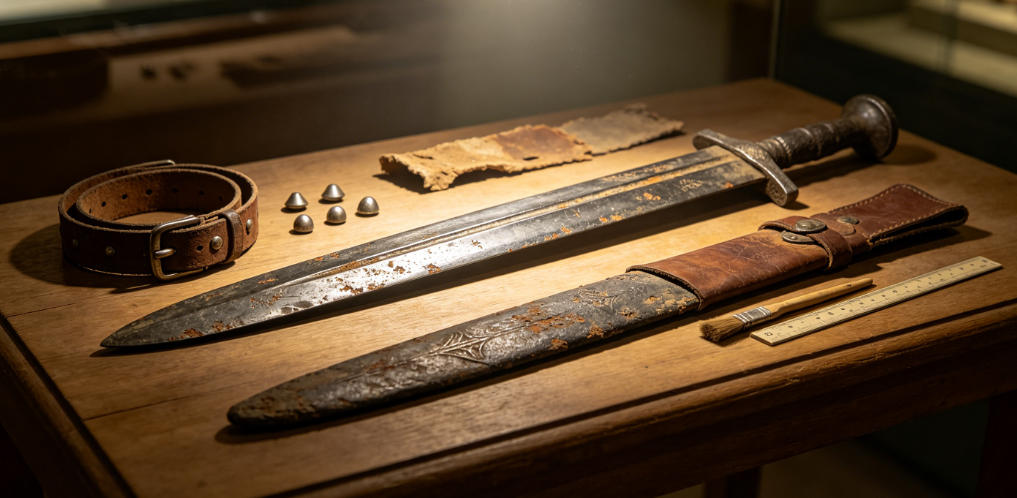
Why did the Roman army replace the gladius with the spatha sword? A complete historical and tactical analysis
In the ancient Roman weapons system, the spatha is a major turning point. It was not just a weapon, but a symbol of Rome’s transition from classical legionary warfare to a more mobile and flexible late-imperial combat system. As the empire expanded across vast and diverse territories, traditional short swords gradually struggled to adapt to increasingly complex battlefield conditions. In this context, the longer and more versatile Roman longsword spatha sword emerged and began to reshape the future of European weapon development.
I. The Birth of the Spatha: A Roman Longsword from the Frontier
The spatha was not originally a standard Roman legion weapon. Instead, it gradually entered Roman service through frontier warfare along the empire’s borders.
As Rome expanded northward, it frequently encountered Germanic tribes, Celtic warriors, and Sarmatian cavalry. These enemies often used longer swords or spears, making the traditional gladius less effective in certain combat situations.
Especially with the growing importance of cavalry warfare, Roman soldiers realized that the short sword lacked sufficient reach on horseback and could not deliver effective strikes at distance. As a result, a longer double-edged straight sword began to be integrated into Roman military use—this early form became known as the spatha sword.
By the 3rd century AD, the spatha was widely adopted by both cavalry and some infantry units, gradually replacing the short sword and becoming one of the primary weapons of the late Roman Empire.
II. Structural Evolution: The Design Logic of the Roman Spatha Longsword
From a structural perspective, the spatha reflects the Roman military’s ability to quickly adapt weapon design to battlefield needs. Unlike the earlier gladius, which emphasized thrusting in tight formations, the spatha focused on balancing reach and cutting efficiency.
Typically, the Roman spatha featured a double-edged blade ranging from 60 to 100 cm in length. Its elongated profile allowed for stronger momentum during slashing attacks while still retaining thrusting capability. A central fuller was often added to reduce weight without sacrificing structural strength.
The hilt design remained primarily single-handed but was longer and better balanced, allowing cavalry soldiers to maintain control during high-speed movement. The pommel, often spherical or oval-shaped, helped stabilize the weapon’s balance and handling.
These structural improvements gradually transformed the spatha sword from a 'thrusting tool' into a more versatile battlefield weapon capable of both cutting and control.

What is the difference between the Roman spatha and the gladius, and why did the Roman army eventually prefer the spatha?
The key difference between the spatha and the gladius lies in tactical doctrine rather than simply blade length. The gladius originated during the Roman Republic and early Empire as a close-combat legionary weapon designed for dense shield formations (scutum-based formations), where soldiers fought in tightly packed ranks. In such conditions, a short, fast, and precise thrusting sword was ideal.
The spatha, however, emerged as a response to changing warfare conditions. It was a longer double-edged straight sword that was no longer restricted to tight formation gaps. Instead, it was better suited for more open and fluid battlefield structures. In practice, the spatha sword could be used not only for thrusting but also for effective slashing and sweeping strikes, giving it a clear advantage against dispersed enemies or cavalry charges.
During the late Roman Empire, warfare became increasingly mobile and unpredictable. Frontier conflicts intensified, and enemy forces—especially Germanic tribes and Sarmatian cavalry—relied heavily on mobility and longer weapons. In this environment, the “longer reach and greater adaptability” of the spatha sword became highly valuable.
This was especially important in cavalry units. On horseback, soldiers needed a larger attack radius; the gladius was too short to reliably strike targets during fast movement, while the spatha allowed more natural and powerful slashing motions, significantly improving the effectiveness of cavalry charges. This transition became a key development in late Roman cavalry warfare.
Furthermore, the Roman military gradually shifted from a single, highly standardized legion system to a more diversified structure combining heavy infantry, auxiliary troops, and cavalry units. In such a system, battlefield flexibility became more important than rigid formation combat. The spatha, being more adaptable across different combat scenarios, naturally replaced the gladius.
Thus, the adoption of the spatha sword was not simply a weapon upgrade—it reflected a broader transformation of Roman military doctrine from 'closed formation warfare' to 'open, mobile combat.'
III. From gladius to spatha: Transformation of Roman Warfare
If the gladius represents the early Roman legion’s disciplined formation fighting style, then the spatha marks a shift toward a more open and mobile form of warfare.
In traditional legion combat, soldiers relied on tight formations and coordinated thrusting attacks. However, as frontier warfare became more complex, this system began to face challenges. Fast-moving cavalry charges and longer enemy weapons forced the Romans to adapt.
With the introduction of the spatha, combat distance increased. Soldiers were no longer limited to close-range thrusting but could deliver broader slashing attacks. This was especially noticeable in cavalry units, where the spatha sword enabled continuous strikes during movement, greatly enhancing battlefield mobility.
At the same time, infantry tactics also evolved. Formations became less rigid and more flexible, emphasizing localized advantages rather than strict uniformity.
IV. Battlefield Advantages: Why the spatha Became a Late Roman Standard Weapon
The widespread adoption of the spatha in the late Roman army was not caused by a single factor, but rather by its ability to solve multiple battlefield challenges simultaneously.
First, extended reach provided a significant tactical advantage. Against Germanic warriors, Gothic tribes, and Sarmatian cavalry, combat was often chaotic and fragmented rather than formation-based. The longer spatha sword allowed soldiers to strike earlier, before enemies could fully close distance, creating a crucial first-strike advantage that often determined survival.
Second, the spatha enabled a shift from single-mode thrusting to multi-functional combat capability. While the gladius relied primarily on thrusting, the spatha added effective slashing and lateral cutting techniques. This gave soldiers greater flexibility in chaotic combat situations such as ambushes, pursuits, or broken formations.
Third, cavalry warfare was significantly strengthened. Late Roman armies increasingly relied on cavalry for rapid strikes and mobile engagements. The spatha’s longer blade allowed for wider arc attacks, increasing damage potential during charges. It also maintained better rhythm during high-speed movement, making it far more effective than the shorter gladius in mounted combat.
Overall, the Roman military gradually shifted from a highly centralized legion structure to a more integrated multi-branch system. In this new structure, adaptability became more important than strict formation discipline, making the spatha sword the natural standard weapon.

V. Craftsmanship and Metallurgy: The Metal Technology Behind the Roman Longsword
From a metallurgical perspective, the development of the spatha reflects the advancement of Roman weapon-making technology. Early versions were forged using basic carbon steel, but as metallurgical knowledge improved, more complex techniques were introduced.
One important development was multi-layer forging, where metal was repeatedly heated, folded, and hammered to remove impurities and improve structural uniformity. This process enhanced both durability and flexibility, reducing the risk of blade failure in combat.
Craftsmen also carefully managed stress distribution along the blade, often incorporating a fuller to reduce weight while maintaining strength. This design improved handling and reduced fatigue during prolonged combat.
Weight control was another critical factor. Most spatha swords weighed around 1 kg, achieving a balanced compromise between striking power, speed, and endurance efficiency. Compared to heavier later weapons, the spatha was optimized for sustained battlefield performance rather than single explosive strikes.
Some advanced blades even show early signs of differential structural optimization, where different sections of the blade had slightly varied hardness—an early conceptual precursor to later European swordsmithing techniques.
VI. Historical Transmission: How the spatha Shaped European Sword Development
The influence of the spatha did not end with the fall of the Roman Empire. Instead, it continued to evolve and spread across Europe.
As Roman control weakened in frontier regions, Germanic tribes adopted spatha sword design principles and gradually developed their own regional sword styles. This evolution eventually influenced Viking-age swords and later transformed into medieval arming swords used by knights.
In this sense, there is a clear evolutionary chain from the Roman spatha sword to medieval European longswords. This is why the spatha is often considered a foundational weapon in the history of European blade development.
VII. Archaeological Evidence and Discoveries
Modern archaeological findings frequently uncover spatha swords in former Roman frontier zones, including Britain, the Rhine frontier, and the Danube military regions.
These weapons are often associated with cavalry or officer ranks, and some feature decorative metal inlays, suggesting that the spatha was not only a combat weapon but also a symbol of status.
Such discoveries highlight the increasing complexity of late Roman military organization, in which equipment differentiation played a significant role.
VIII. Cultural Significance: A Symbol of Imperial Transformation
In cultural terms, the spatha represents more than a weapon. It symbolizes the structural transformation of the late Roman Empire—from standardized short-sword legion warfare to a more diverse and adaptive combat system.
It also reflects Rome’s ability to absorb foreign military traditions and integrate them into its own system, a process that ultimately shaped the long-term evolution of European warfare.
IX. Modern Reproductions and Collectible Value
Today, the spatha remains highly popular in the historical weapons and collectible markets. Many enthusiasts and collectors choose hand-forged spatha sword replicas for display, reenactment, or film production.
Modern reproductions often use high-carbon steel and traditional forging techniques to recreate historical authenticity. These spatha swords are valued not only for aesthetics but also for their connection to ancient European martial culture.
X. Conclusion: The True Historical Importance of the spatha
The spatha is far more than just a weapon. It represents a critical turning point in Roman military evolution and serves as one of the earliest foundations of the European longsword tradition.
From frontier battles to imperial legions, from cavalry charges to medieval knightly warfare, the spatha played an irreplaceable role in shaping military history.
It did not merely define an era of combat—it helped shape the trajectory of European weapon development for over a millennium.

