


Estoc Sword History, Design & Uses: Medieval Armor-Piercing Weapon
- Posted by COOLKATANA
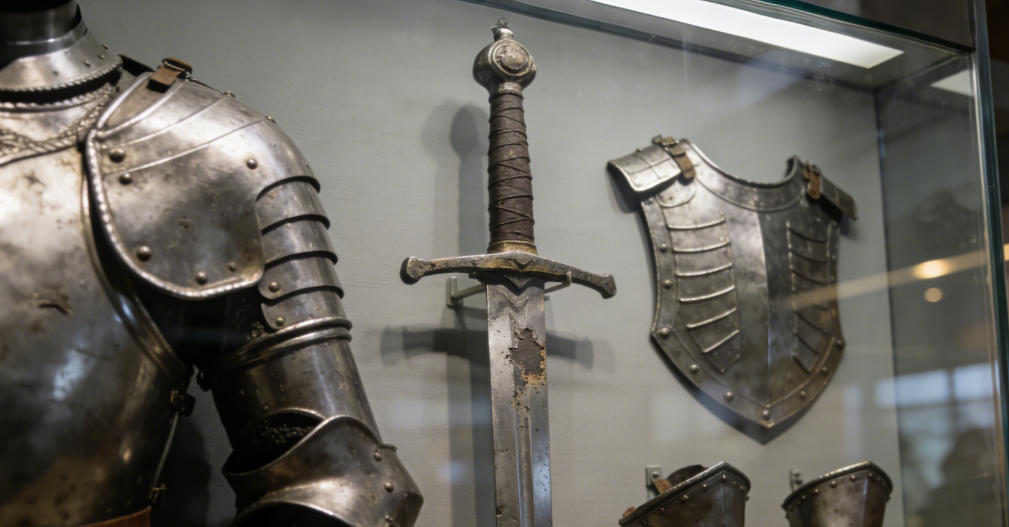
What Is an Estoc Sword and How Was It Used in Medieval Battles?
Estoc is a long thrusting sword designed specifically to pierce armor, making it one of the deadliest weapons of medieval Europe. As a classic estoc sword, it played a decisive role in battles involving knights and heavily armored infantry.
This article provides an in-depth look at the origin, design features, combat uses, and comparisons with other medieval swords, helping you fully understand this legendary weapon.
What is an Estoc?
Estoc is a long thrusting sword originating in medieval Europe, designed to penetrate full plate armor. Its defining feature is the near absence of a traditional cutting edge, with the design focused entirely on thrusting power, making it a lethal weapon against armored knights and heavy infantry on the battlefield.
The rise of the estoc is closely tied to the development of medieval armor. As steel plate armor became widespread, slashing swords lost effectiveness against fully armored opponents. Warriors needed a sword capable of precisely targeting armor gaps, and the estoc sword was developed to meet this need. Its design emphasizes rigid blade construction, a sharp point, and a forward center of gravity, allowing it to quickly pierce defenses and keep enemies off balance.
This thrusting sword was widely favored on medieval battlefields, whether by mounted knights facing infantry or foot soldiers defending against armored cavalry. The blade was typically long and straight, usable with one hand or two for added stability and piercing power, showcasing the ingenuity and practical focus of medieval European weapon design.
Overall, the estoc sword was designed for both combat and defense, symbolizing technological progress while reflecting tactical needs. It is one of the most iconic medieval battlefield weapons specialized for thrusting attacks.

History and Origins of the Estoc Sword
The estoc originated in Europe during the late 12th to early 13th century. With the widespread use of steel plate armor and chainmail among knights and heavy infantry, traditional slashing swords became ineffective against armor. To overcome full-body protection, warriors developed a longer, sturdier sword optimized for thrusting — the estoc sword.
Initially, the estoc appeared on battlefields in France, England, the Holy Roman Empire, and Italy. It became a primary weapon for knights, as well as a common armament for infantry and castle defenders. Compared to longswords or broadswords, the estoc sword emphasized straight stabbing capability, capable of precisely piercing armor gaps and weak points, crucial for engagements with heavily armored foes.
From the 13th to the 15th centuries, the estoc sword was widely used across Europe, becoming a key component of medieval military tactics. It was not only a weapon for knights but also played a central role in anti-armor strategies. During the Crusades, the Hundred Years’ War, and local feudal conflicts, the estoc significantly influenced battlefield dynamics, making piercing attacks a critical strategy.
The estoc sword’s emergence represented both a technical response to armor defenses and a major evolution in European cold weapon design. From then on, thrusting swords became the most reliable and effective weapon against heavily armored opponents.
Structure and Design Features of the Estoc
The estoc sword exemplifies the thrusting long sword of the medieval era, with a structure optimized for penetrating full armor. Every aspect of the estoc reflects tactical and functional design, whether in knightly duels or infantry engagements.
1. Blade Design
The estoc’s blade is long, rigid, and optimized for thrusting, featuring:
- Long thrusting blade (typically 90–120cm): Longer and straighter than standard swords, increasing reach and penetration.
- Minimal or blunt edge: Reduces cutting function, focusing entirely on thrusts to precisely target armor gaps.
- Diamond or round cross-section: Enhances blade strength and durability, making it resistant to breaking in combat.
- Sharp pointed tip: Slim and rigid, capable of piercing chainmail joints or weak armor areas.
- Forward-shifted center of gravity: Maximizes thrusting efficiency, maintaining stability during rapid attacks.
This specialized design makes the estoc a classic thrusting weapon, ideal for armored knights and heavily protected infantry.
2. Hilt and Guard
To maximize thrusting power and control, the estoc’s hilt and guard were carefully designed:
- Long two-handed grip: Provides greater leverage for powerful thrusts.
- Crossguard or ring guard: Protects the hand from strikes while enhancing sword control.
- Sturdy construction: Ensures the blade and grip remain connected during intense combat.
- Versatile design: Suitable for one- or two-handed use, allowing quick thrusts, parries, and counterattacks.
Overall, the estoc sword showcases medieval weapon craftsmanship while remaining highly functional on the battlefield, making it an indispensable piercing weapon for knights and infantry alike.
Combat Uses of the Estoc Sword
✔ Piercing Armor Gaps
The pointed tip is capable of penetrating seams in knight armor, making it ideal against heavily armored opponents.
✔ Anti-Knight Tactics
When faced with armored knights, traditional slashing swords proved ineffective; the estoc sword became the weapon of choice.
✔ Defense and Counterattacks
It can also be used for parrying, controlling distance, and delivering quick thrusting counterattacks.

Comparison with Other Medieval Swords
| Weapon Type | Design Features | Primary Use |
|---|---|---|
| Estoc sword | Long, narrow blade optimized for thrusting | Piercing armor gaps |
| Longsword | Sharp blade, versatile cutting and thrusting | General close combat |
| Broadsword | Heavy blade, designed for slashing | Armor-breaking strikes |
| Falchion | Single-edged, curved blade | Slashing and quick cuts |
The estoc sword is specialized for piercing, focusing exclusively on heavily armored targets.
Historical Significance of the Estoc Sword
The estoc sword represents a critical evolution in medieval European battlefield tactics and technology:
- As armor protection increased, traditional slashing swords became ineffective, driving the need for dedicated thrusting weapons.
- Thrusting swords became the dominant battlefield weapon, shifting tactics from brute force slashing to precise armor penetration.
- It transformed knight and infantry combat strategy, emphasizing precision over sheer strength.
- The estoc marked the trend toward specialized, functional cold weapons and became one of the most iconic weapons of the armored era.
Historically, the estoc was both a battlefield weapon and a symbol of knightly skill and training, reflecting technological advancement and tactical innovation in medieval Europe.
Modern Applications of the Estoc Sword
Although no longer used in actual combat, the estoc sword continues to hold legendary status in modern contexts:
- Historical weapon collection: High-quality estoc replicas are prized by collectors and medieval enthusiasts for their historical and aesthetic value.
- Film and historical reenactments: Essential props in movies, TV series, and reenactments, giving audiences a realistic experience of medieval combat.
- Museum exhibits and education: Allows the public to study medieval armor, battlefield tactics, and thrusting sword techniques up close.
- Cosplay and decorative replicas: The estoc’s classic design makes it a popular choice for roleplay, themed costumes, and collectible displays.
Overall, the estoc sword has evolved from a battlefield instrument to a cultural icon, collectible masterpiece, and educational tool, remaining a focal point for cold weapon enthusiasts and history buffs today.
Conclusion
The estoc sword is a medieval long thrusting sword designed to pierce armor, reflecting both the evolution of weapon technology and battlefield tactics. Whether for historical study, collection, or reenacting medieval combat, it remains a timeless and iconic weapon.

